Wudang Xing Yi Quan
Wudang Xing Yi Quan (Form-and-Will Boxing)
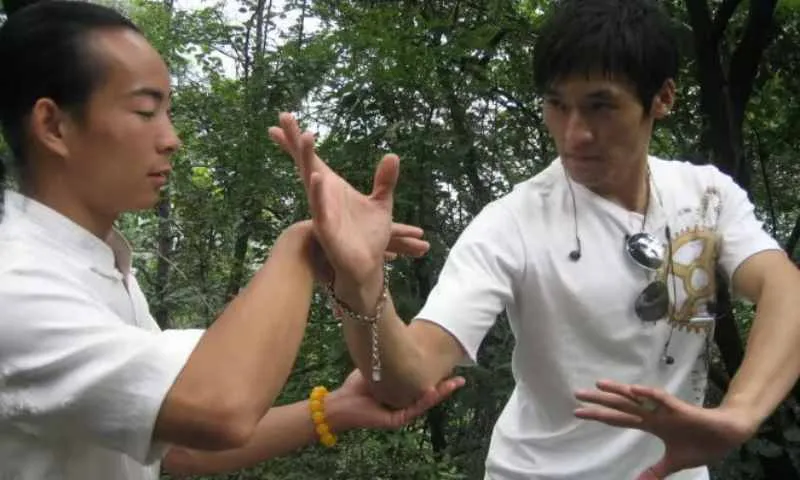
Wudang xing yi quan, also known as Xingyi Boxing, stands as one of the most powerful and revered internal styles within traditional Chinese xing yi martial arts. Characterized by its explosive, linear movements and deep focus on internal power development, it bridges the gap between meditative health preservation and highly efficient combat application.
Historical Origins and Evolution
Although there are various accounts of its origin, the widely recognized founder of the art is Ji Jike (1602–1680), a native of Puzhou, Shanxi (present-day Yongji City), who lived during the late Ming and early Qing dynasties.
When it was first created, the system was called Xinyi Liuhe Quan (Mind-Intention Six Unities Boxing). This name refers directly to the required structural harmony, which is divided into three internal unities and three external unities:
Internal Unities: Mind (Xin) and Intention (Yi), Intention and Energy (Qi), Energy and Strength (Li).
External Unities: Shoulder and Hip, Elbow and Knee, Hand and Foot.
The modern popular version of the art was reformed and developed by Li Luoneng, a native of Shenzhou, Hebei Province, during the Daoguang reign of the Qing Dynasty. By modifying the earlier Xinyi Quan, Li Luoneng emphasized the high integration of inner intention and external form. Later generations honor him as the grand master who popularized the foundational xing yi quan forms practiced worldwide today.
Core Structural Components
The comprehensive training system established by Li Luoneng consists of three core structural pillars designed to cultivate explosive internal power (Fa Jin):
The Santishi Stance (Three 体势)
The Santishi Stance is the unique basic skill, foundational root, and primary internal training method of wudang xing yi quan. It is widely said among masters that “All techniques originate from the Santishi Stance.” This static stance trains the practitioner’s skeletal alignment, sinks the Qi to the Dantian, and develops the essential whole-body structure needed to issue striking power efficiently.
The Five Elements Fists (Wuxing Quan)
These primary xing yi quan techniques integrate classical Chinese cosmological philosophy with practical biomechanics. Each of the five fists corresponds to one of the five elements and targets specific energetic pathways (meridians) within the body:
| Element | Xing Yi Fist Type | Combat Mechanics & Kinetic Application |
| Metal | Pi Quan (Splitting Fist) | A downward, axe-like chopping strike that expands the lungs. |
| Water | Zuan Quan (Drilling Fist) | A fluid, spiraling upward punch that stimulates the kidneys. |
| Wood | Beng Quan (Crushing Fist) | A rapid, straight, cannon-like punch that promotes liver health. |
| Fire | Pao Quan (Cannon Fist) | A violent, explosive blocking-and-striking routine that aids the heart. |
| Earth | Heng Quan (Crossing Fist) | A crossing, diagonal, short-range defensive strike that aligns the spleen. |
The Twelve Animal Forms (Shi'er Xing)
Moving beyond the linear basics, the Twelve Animal Forms expand the practitioner’s tactical options. Rather than just mimicry, these are combat routines created by imitating the specific spirit, offensive movements, and structural characteristics of twelve distinct creatures:
The Heaven Animals: Dragon (Long), Tiger (Hu), Bear (Xiong), Snake (She).
The Land Animals: Tai (a type of mystical horse), Monkey (Hou), Horse (Ma), Rooster (Ji).
The Water & Sky Animals: Swallow (Yan), Crocodile (Tuo), Harrier (Yao), and Eagle (Ying).
Combat Philosophy and Application
Unlike styles that rely on flashy acrobatics, wudang xing yi quan focuses on practical, direct utility. The fighting philosophy utilizes strict centerline defense and simultaneous attack-and-block maneuvers.
Key Combat Principle: A practitioner does not back away defensively; instead, they step forward aggressively to occupy the opponent’s space, using their unified bodily mass to break through the opponent’s guard.
By mastering these unified xing yi quan forms, martial artists develop a resilient physique, enhanced mental focus, and an incredibly direct self-defense capability that remains a cornerstone of traditional Chinese martial culture.